The Library
Every discovery, on the record.
Browse the full body of work. Each entry tells you what the research found, what it means, and where it falls short — with credit to the authors and a link to the original paper.
All entries
 2026
2026Philosophy · Economic thought
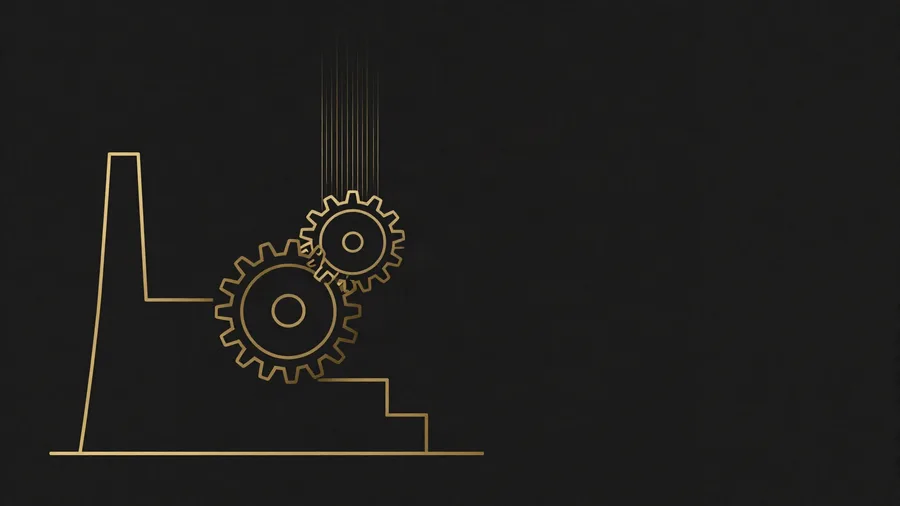
The economist who said instability is the point
Most economics of his era treated a market's resting point — equilibrium — as the thing worth explaining. One economist argued the opposite: that capitalism works because it never rests, constantly destroying its own creations to build the next ones. That claim still shapes how we talk about disruption, monopoly, and growth.
 2026
2026Philosophy · Language
The philosopher who built a wall around language, then tore it down
Ludwig Wittgenstein wrote a hundred-page book claiming to have solved philosophy's real problems by drawing a hard line around what language can meaningfully say. Twenty years later he took the book apart and built something close to its opposite.
 2026
2026Philosophy · Metaphysics
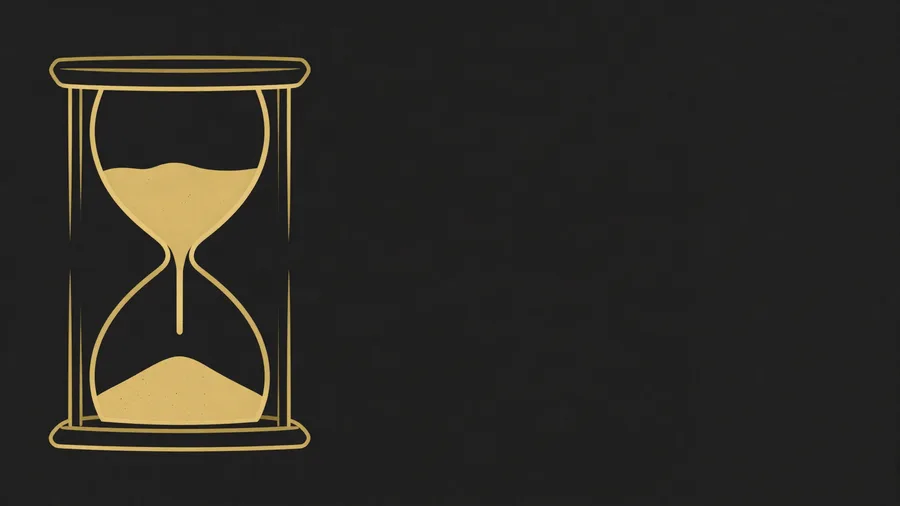
He asked what time is, and found the answer wasn't in the universe
Ten years apart, Augustine asked two questions that sound unrelated — why does the will fight itself, and what is time — and solved both the same way: by relocating the answer from the outside world into the mind. Neither answer has stopped being argued over.
 2026
2026Philosophy · Political thought
Three thinkers imagined life with no government. They agreed on nothing.
Hobbes, Locke, and Rousseau all used the same thought experiment — strip away government and ask what people would rationally agree to build — and landed on three incompatible answers. The gap between them still shapes every modern argument about how much power authority deserves.
 2026
2026Philosophy · Political thought
The economist who spent his life writing about sympathy
Adam Smith is remembered as the philosopher of self-interest, but the book he revised until the year he died was about how humans build a conscience out of imagining what a fair observer would think. The two projects were never at odds.
 2026
2026Philosophy · Epistemology
Why you can't actually prove the sun will rise tomorrow
David Hume noticed a gap nobody had questioned: we can never actually prove a cause must produce its effect, only that it always has so far. Immanuel Kant spent a decade trying to answer him — and ended up rebuilding what "knowledge" even means in the process.
 2026
2026Psychology · Metascience
Two hundred scientists tried to replicate 100 psychology studies. A third held up.
In 2015, a coalition of roughly 270 researchers reran 100 published psychology studies from scratch to see how many of their results would come back. Only about a third to forty percent did — and the ones that faded fastest were the flashiest social-psychology findings.
 2026
2026Philosophy · Philosophy of science
Why two scientists can look at the same fire and see different worlds
Science isn't a straight climb toward the truth, one fact stacked on another. It moves in loops — long stretches of quiet puzzle-solving inside a shared framework, broken every so often by a crisis that forces the whole framework to be replaced. That's the idea Thomas Kuhn gave the world, along with the word for it: paradigm shift.
 2026
2026Philosophy · Philosophy of religion
The argument nobody has won in two thousand years
If God is all-powerful, God could stop suffering. If God is all-good, God would want to. Suffering keeps happening anyway — and for over two thousand years, four very different attempts to resolve that triangle have never quite managed to satisfy everyone who's taken them seriously.
 2026
2026Philosophy · Political thought
The man who said he wasn't a Marxist
Seven years after Marx died, Engels recalled him watching his own followers turn his ideas into slogans — and remarking that all he knew was that he was not a Marxist. Stripped of a century and a half of shorthand, what did the actual books argue?
 2026
2026Philosophy · Economic thought
The economics argument that never actually ended
In the middle of the Great Depression, two economists looked at the same collapsing economy and reached opposite diagnoses. One argued the government should spend its way out; the other argued the bust was the cure for a boom that was never real. A century later, neither side has closed the argument — and the two men were close friends anyway.
 2026
2026Philosophy · Epistemology
He doubted everything on purpose — and found the one thing that survived
Alone in a heated room in the Dutch countryside, René Descartes pushed doubt further than anyone had dared — past his senses, past the world, past mathematics itself — looking for one thing solid enough to build knowledge on. He found it in a single Latin sentence that's still the most quoted line in philosophy.
 2026
2026Philosophy · Religious history
The bookkeeping complaint that split the Church in two
A thirty-three-year-old monk wrote ninety-five academic statements meant for a handful of German churchmen. Within a year they were circulating from Rome to London — because a new printing technology could carry an argument faster than any pope or emperor could contain it.
 2026
2026Philosophy · Political thought
Is it better to be feared or loved? Machiavelli actually answered that
A disgraced, tortured ex-diplomat sat down with nothing left to lose and wrote the book that made "Machiavellian" an insult. What he actually argued is sharper, and stranger, than the caricature — and he wrote a second, much longer book that seems to argue the opposite.
 2026
2026Neuroscience · Sleep
Your brain's cleaning crew works a night shift — on a clock of its own
The brain's waste-clearance system was thought to switch on simply because you're asleep. A study in mice found something more precise: the cleaning follows its own internal 24-hour clock, largely independent of whether the lights are on.