Philosophy · Political thought
Is it better to be feared or loved? Machiavelli actually answered that
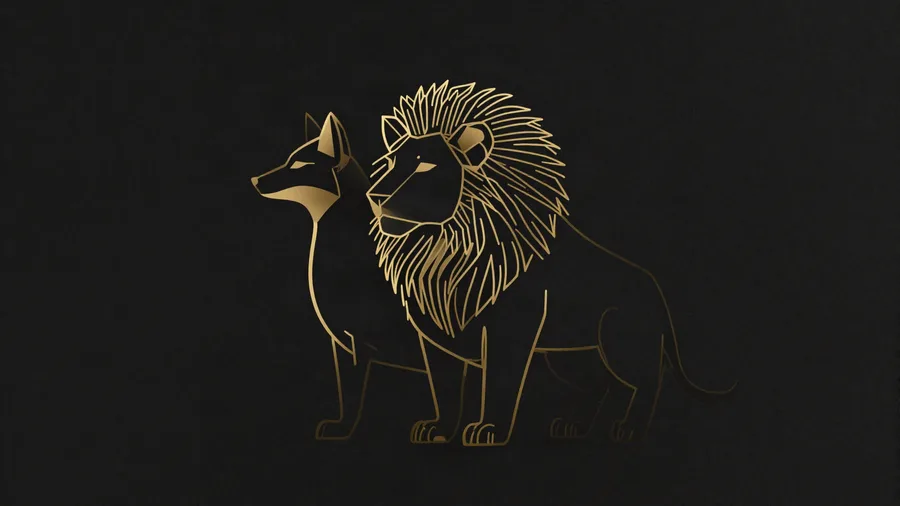
"A ruler judged by outcomes learns to fear nothing but hatred."
A disgraced diplomat sits down on a farm outside Florence to write a book. His government has just fallen. He has been tortured on suspicion of conspiracy, and he has, by any ordinary measure, nothing left to lose. What comes out of that farmhouse in 1513 is a short, blunt manual for rulers that will eventually turn his own name into an insult — and its most notorious line, that it is safer for a prince to be feared than loved if he cannot manage both, is usually quoted with the second half of the sentence lopped off.
Before Machiavelli, the advice literature written for princes ran on a simple assumption: moral goodness and political success were the same project, so a ruler who cultivated virtue would find good government following naturally behind it. Machiavelli had spent fourteen years as a working diplomat watching that assumption collapse against real popes, kings, and warlords, and The Prince is his attempt to write down how power actually survives rather than how a moralist wishes it did. Two ideas carry that project. Virtù is not virtue in the moral sense but a ruler’s skill and adaptability — the readiness to act however a situation demands rather than clinging to one fixed style out of habit. Fortuna is fortune reimagined as a hostile river that floods a plain: it does its worst damage exactly where no one built embankments while the weather was still calm, which means half of what happens to a prince is luck and the other half is how well he prepared for it.
From there the book gets specific, and uncomfortable. A prince needs the fox’s cunning to spot traps and the lion’s force to scare off wolves, because a ruler who cannot always keep his promises still has to survive in a world where nobody else keeps theirs either. The line about fear and love, read in full, is narrower than its reputation: Machiavelli warns a prince above all to avoid being hated, since fear can be made into a tool for order while hatred is what actually gets rulers overthrown. Even the phrase everyone associates with him — “the ends justify the means” — appears nowhere in the text. What he actually wrote is closer to an observation that powerful men are judged by their outcomes rather than the purity of their methods: a description of how princes get judged, not a license he was handing out.
What makes that argument matter beyond its own century is what historians describe as a kind of divorce. Machiavelli was among the first major Western writers to argue, systematically, that political effectiveness and personal moral goodness are not the same project, and that collapsing the two together gets rulers — and the people who depend on them — killed. Isaiah Berlin read this as Machiavelli stumbling onto two genuinely conflicting value systems, the classical civic ideal and the Christian ethical ideal, rather than one turning out to be secretly the truth behind the other. Politics, on this reading, runs on its own logic, separate from private ethics — and whether you take that as hard-won realism or as a dangerous excuse, it is the part of the book that outlived the man.
It is worth sitting with how much The Prince leaves out about its own author. Machiavelli was not writing from a settled conviction that ruthless princes were the ideal — around the same years, in the same exile, he was also writing the much longer Discourses on Livy, published in 1531, a commentary on early Roman history that argues republics, not princedoms, are the most durable form of government precisely because they distribute power and depend on active citizens rather than one man’s virtue. The supposed champion of the solitary ruthless ruler spent hundreds of pages admiring the Roman Republic’s checks on that same kind of power, and scholars are genuinely divided on how to reconcile the two books — some read The Prince close to face value, others as a diagnosis of what a fractured, invaded Italy needed to survive before healthier republican government could return. Even the word “Machiavellian” turns out to owe less to anything he wrote than to a furious 1576 pamphlet by Innocent Gentillet and to the villainous stock characters of English Renaissance theater — which means most people carry the caricature around without ever having read either book.